

A Worm's Eye View of Nature in Eastern Canada
On Kickstarting a Video Nature Journal

It’s been a big year for me, and it’s time to rest. I am fortunate enough to take next week off to have a father-son road trip to Montreal in the books, the quite-large metropolis in the Canadian province of Quebec.
That said, I tend to make my off-day trips all about enjoying nature. Because that’s what I like to do, even on vacation.
So why Montreal? I chose the place not only to “escape” the monotony of day-to-day life in small-town New Brunswick (Don’t get me wrong, I love it here but it’s nice to be in a bigger place for a bit), but also to explore nature in the city.
One year ago, my Toronto trip led me to discover that even though I have nothing to envy to these large places, nature-wise (I’m looking at you, dog-strangling vines and invasive phragmites), the movement to rewild urban spaces is picking up steam over there, in Canada’s big cities. That way, people will have access to nature in their own backyard: the most accessible way to enjoy the birds, the bees and the butterflies.

Montreal was named for Mount Royal (Mont-Royal), one of the Monteregian Hills. Without going into complicated geological terms that even I do not understand, those isolated hills made of volcanic rock, are sort-of stepping stones for wild birds, and a special part of Quebec’s agricultural and metropolitan heart: they’re islands of nature in a sea of fields and buildings.
In preparation for my visit, I decided to do some target practice on a local coup-de-cœur: Tantramar’s Quarry Park.
Some people might find videos of plants boring — but this time, a friend showed up! I’ll let you watch it now.
In making this video, I realized that I had a lot to learn, and that many surprises show up along the way.
It’s also hard to get traction, so the only thing I can do is to keep on making them. For now, I like to let nature speak for itself.
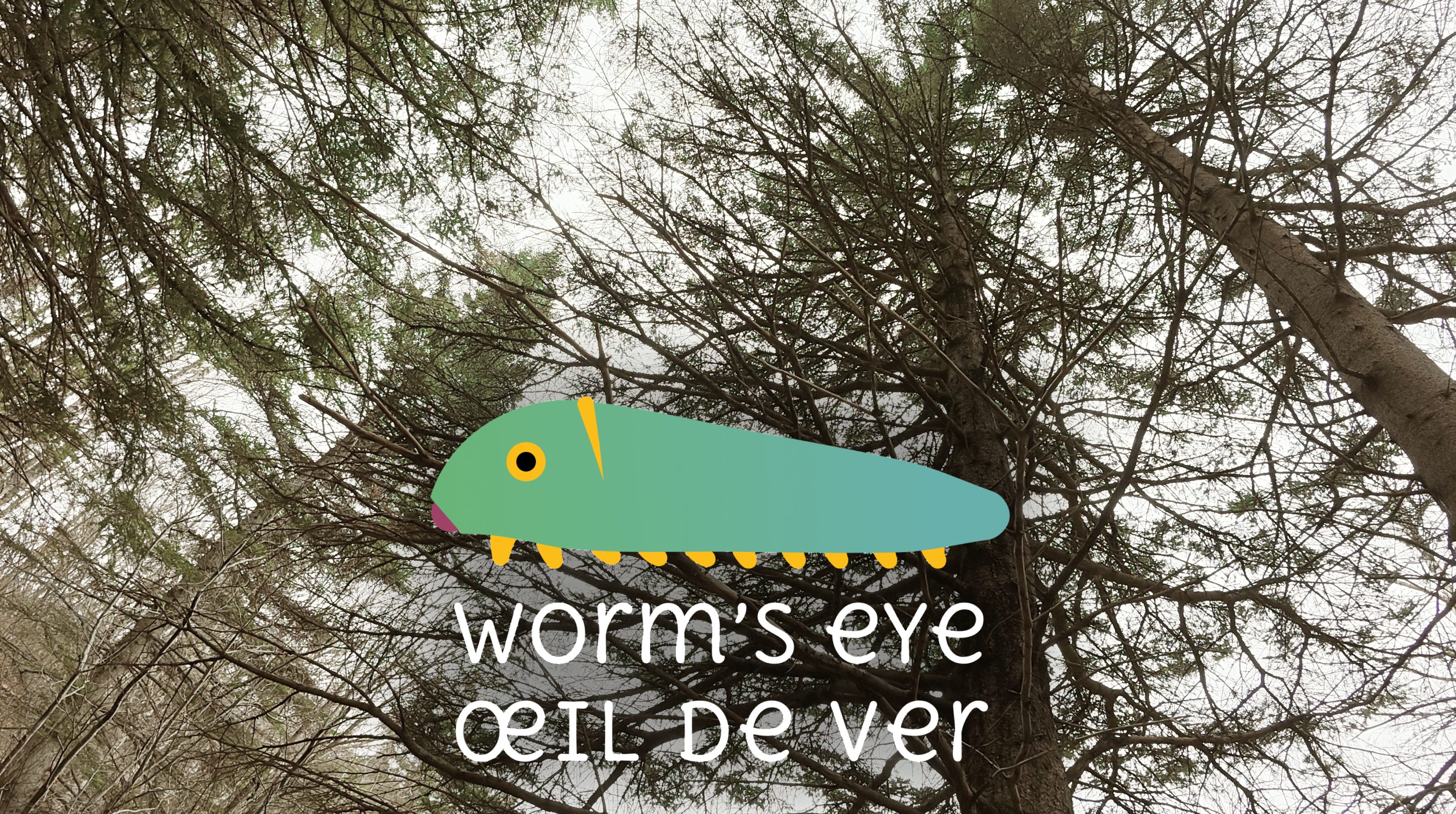
The “Worm’s Eye”
We talk a lot about Bird’s Eye View in filmmaking, especially today with drone footage and animated maps. But in truth, I find the Worm’s Eye (the opposite of Bird’s Eye) even more interesting, because it’s close to us landlubbers.
Scientifically, a butterfly or moth larva is a caterpillar. But a “worm” is often a common term for them (silkworm, army worm).
And what worm has an eye? Why, the young Tiger Swallowtail Butterfly, of course.
My father is also a nature enthusiast and a videographer, so this lets me have some help along the way to make engaging nature shots. We’ll start with this December trip, and we’ll go further to document nature in all seasons.
I’ve been told that AI might replace videographers. But even before believing that, I know that I’d better have a boring video than a machine “replacing” even one shot of real footage. At least for my creative process.
See you soon with more videos!

Mid-December 2025
I ended up creating a video of the Rapids park in Lasalle, QC!